
 English
 Deutsch
 Español
 Français
 Italiano
 Polskie
 Nederlands

Ostoskori
Your cart is empty, but doesn't have to be..
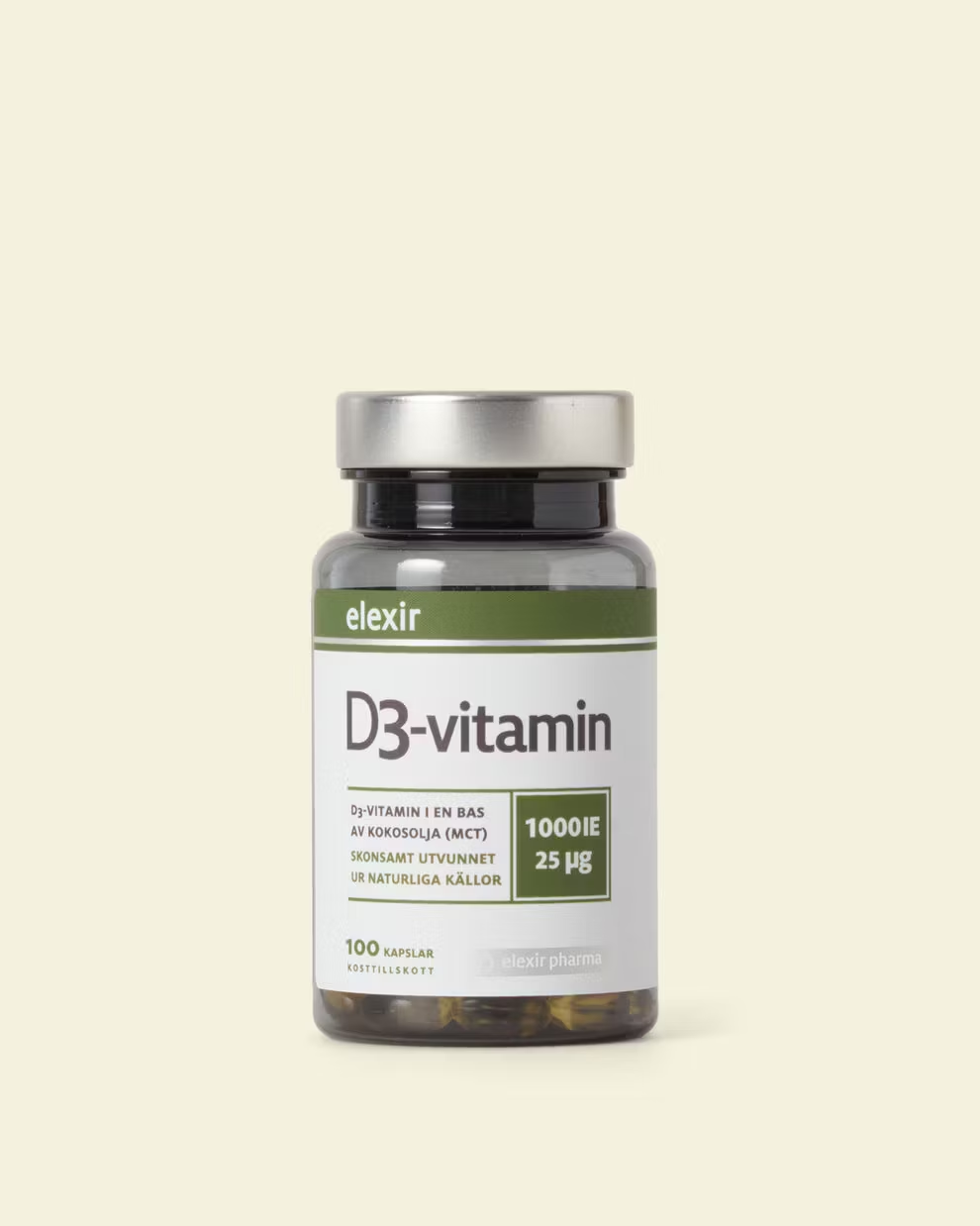
1000IU (25 µg) D-vitamiinia kapselia kohden
Kookosöljypohjainen parhaan imeytymisen takaamiseksi
Edistää immuunijärjestelmän normaalia toimintaa
Edistää luuston normaalin kunnon ylläpitämistä
Edistää normaalin lihastoiminnan ylläpitämistä
Edistää normaalin hampaiden ylläpitoa
D3-vitamiinia muodostuu ihossa auringonvalon vaikutuksesta, ja koska aurinko ei ole Pohjoismaissa riittävän korkealla suurimman osan vuotta, on suositeltavaa ottaa D-vitamiinia ravintolisien kautta. D-vitamiini on peräisin luonnollisesta lähteestä (lanoliinista).
Edut
Pohjoismaissa on pulaa D-vitamiinista
D-vitamiinia muodostuu ihossa auringonvalon vaikutuksesta kevät- ja kesäkuukausina Ruotsissa. Toukokuun ja syyskuun välisenä aikana imeytyminen ihon läpi on parhaimmillaan, edellyttäen, että et käytä aurinkovoidetta tai peittäviä vaatteita. Kesäkuukausina aurinko on D-vitamiinin ensisijainen lähde, mutta myöhäissyksystä kevääseen merkittävää D-vitamiinin synteesiä ei voida odottaa, koska UV-B-säteily suodattuu pois ilmakehässä auringon ollessa matalalla. Vielä muutama vuosi sitten monet ihmiset pitivät itsestäänselvyytenä, että kesän aikana elimistön syntetisoima D-vitamiinimäärä kattaisi tarpeen myös talvikuukausina, koska D-vitamiini on rasvaliukoista ja voi siksi varastoitua elimistöön. Nykyään kuitenkin tiedetään, että syntetisoitu määrä ei usein riitä ja että vain jotkut ihmiset ovat tuottaneet tarvittavan määrän kattamaan suuremman osan tarpeesta myös talvikuukausina. Siksi monilla ihmisillä on riski saada liian alhaiset D-vitamiinitasot suuren osan vuodesta.
Aurinkovoide suojaa – mutta myös estää D-vitamiinin synteesiä
Aurinkovoiteen käytöllä on tärkeä tehtävä: se suojaa ihoa auringonsäteiden haitallisilta vaikutuksilta. Samalla estetään myös prosessi, jossa auringonsäteet syntetisoivat ja luovat luonnollisia D-vitamiinivarastojamme ihossa. Myös ihon väri vaikuttaa imeytymisen tehokkuuteen. Mitä tummempi ihosi on, sitä vähemmän D-vitamiinia imeytyy. Hyvin vaaleaihoiset pohjoismaalaiset käyttävät mielellään hieman enemmän aurinkovoidetta välttääkseen punoituksen ja auringonpolttaman riskin, mikä on täysin oikein, mutta samalla menetämme myös D-vitamiinin saantia. Monet ihmiset sen sijaan suojautuvat kokonaan peittävillä vaatteilla tai oleskelevat varjossa, mikä tarkoittaa myös sitä, että menetämme auringon D-vitamiinin saantia.
D-vitamiini ruokavaliossa
Valitettavasti D-vitamiinia ei saada suuria määriä ruokavaliosta, joten esimerkiksi tiettyihin maitotuotteisiin on lisätty D-vitamiinia. Vitamiinia on myös pienempiä määriä munissa ja lihassa. Lohi, sardiinit, makrilli ja muut rasvaiset kalat ovat hyviä D-vitamiinin lähteitä. Jotkut sienet, kuten kantarellit, sisältävät itse asiassa jonkin verran D-vitamiinia, mutta inaktiivisemmassa muodossa.
Vaikuttaa kehon tärkeisiin järjestelmiin
D-vitamiinilla on kyky vaikuttaa useisiin kehon solutoimintoihin, mikä puolestaan vaikuttaa terveyteemme monin eri tavoin. D-vitamiinilla on tärkeä rooli kalsiumin ja fosforin imeytymisessä ja hyödyntämisessä, hermoston ja lihasten normaalissa toiminnassa, ja se edistää myös normaalisti toimivaa immuunijärjestelmää. Myös muut kehon osat, kuten luuranko ja hampaat, ovat riippuvaisia D-vitamiinista, ja sitä tarvitaan solujen jakautumisprosessiin.
| Ravintoaine | Määrä | %DRI* |
|---|---|---|
| D3-vitamiini | 25 µg | 500 % |
| Oxy'less® Rosmariiniuute | 5 mg | ** |
* DRI = Päivittäinen vertailuarvo.
** DRI-arvoa ei ole vahvistettu.
Ainesosat: MCT-öljy (kookos), kapseli (naudan liivate), sakeuttamisaine (glyseroli), antioksidantti: rosmariiniuute (Rosmarinus officinalis L.), D3-vitamiini (kolekalsiferoli).